There is a better way forward — but it starts with stopping.
At this point, the Board’s most responsible option is to pause.
Cease moving forward on local area plans and amendments to the CZB until the OCP is properly addressed.
The current Board set the strategic direction that led us here and reinforced it through adoption of the OCP. They do not have a mandate to change direction now.
The most responsible step — for the community and for stability — is to stop and allow the next Board, with a clear mandate, to carry this forward.
Let’s reset and focus on solutions that actually fit our communities.
What Happened, What the Law Allows, and What We Do Next
There’s a reason the zoning bylaw is getting so much attention — but it’s not where the issue starts.
The Comprehensive Zoning Bylaw (CZB) isn’t the problem — it’s the outcome.
If we don’t step back and look at how we got here, we’ll just keep fixing symptoms instead of addressing the root cause.
What they were trying to do
Back in 2018, the Cowichan Valley Regional District set out to fix some real issues.
At the time, there were multiple OCPs in place, each written at different times, using different languages and structures, and applying different rules across electoral areas. That created confusion not just for the public, but for staff and applicants trying to navigate the system. From an administrative point of view, it was inefficient and inconsistent.
Those were real problems.
But that’s only part of the picture.
For many people living here, their OCP worked. Expectations were clear. Their day-to-day reality wasn’t under pressure. So while there were system issues, they weren’t necessarily community issues.
In many cases, things weren’t “broken” on the ground.
There was also a shift happening
At the same time, the region itself was changing.
There was more interest in the valley, and in some areas, pressure was starting to build. Conversations around housing, environmental protection, and growth were becoming more prominent. With that came a shift in mindset — toward more structure, more long-term planning, and more alignment with provincial direction.
That shift wasn’t wrong.
But it wasn’t happening evenly across the region. Some areas were feeling that pressure. Others weren’t.
Where it started to break
The issue isn’t that they harmonized.
Harmonizing structure — cleaning up language, aligning formats — makes sense.
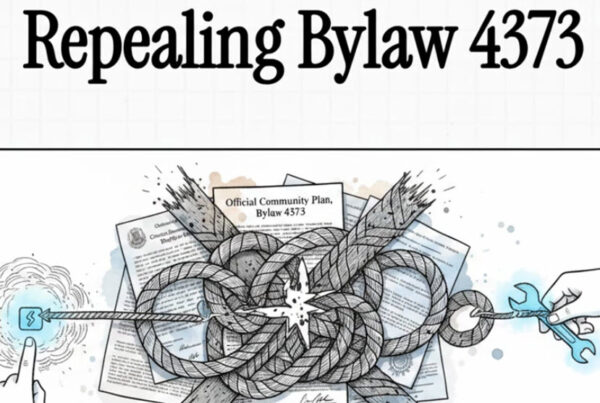
It started to break when the process moved from harmonizing to modernizing the OCP.
Instead of just making plans consistent, the modernization phase began shaping how land should be used, how growth should occur, and how environmental tools should be applied across the entire region.
That’s where it shifted from consistency to uniformity.
What changed from harmonized to modernized
It’s also important to recognize that the earlier harmonized approach still allowed for local differences.
While the OCP structure was aligned, individual electoral areas could still tailor how land was used through their zoning bylaws.
That meant the framework was consistent, but the application could still reflect local conditions.
As the process moved into modernization, more direction shifted into the OCP itself. Zoning became less about shaping local outcomes and more about implementing a framework that had already been defined at a higher level.
The more detailed and prescriptive the OCP became, the less flexibility remained at the zoning level.
And that’s where tension started to show up — especially in a region where different areas function very differently.
What should have been standardized
There is real value in standardizing certain parts of the system.
Standardizing definitions, terminology, and how planning tools are structured improves clarity and consistency for everyone. It makes bylaws easier to understand, easier to administer, and more predictable for the public.
But that is very different from standardizing how land is used across very different parts of the region.
That’s where the current approach starts to break down.
Some things should be consistent everywhere. Others need to reflect where you are and how the land is actually used.
Take definitions, for example. A secondary suite or accessory dwelling unit should mean the same thing in every electoral area. That avoids confusion and creates consistency. But whether additional units are appropriate depends on servicing, lot size, and whether the area is rural or intended for growth.
The same applies to zoning structure. It makes sense to organize bylaws in a consistent way so people can navigate them. But it does not make sense to apply the same land use expectations to areas that function completely differently.
Environmental tools are another example. It makes sense to clearly define how things like setbacks or development permit areas work. But applying them uniformly across the region, regardless of actual risk or pressure, can create unnecessary restrictions without improving outcomes.
The takeaway is simple:
Standardizing language and structure makes the system better.
Standardizing land use across very different communities does not – it divides the community
Why that doesn’t fit a regional district
A regional district isn’t one community. It’s a collection of very different places.
In the CVRD, that includes growth areas like South Cowichan, unique characters of rural communities, forestry and agricultural lands, waterfront and recreational areas, and low-density or semi-remote areas that are barely changing at all.
These are fundamentally different systems — each with its own pressures, servicing levels, expectations, and risks.
A single planning model doesn’t naturally fit all of that.
The core issue is simple:
We treated diversity like it was something to clean up. It’s not. It’s something to plan for.
Why people are reacting now
People experience this at the zoning level, because that’s where it becomes real.
But zoning doesn’t create the direction — it follows it. It has to be consistent with the OCP.
So what people are reacting to now is the first real impact of that one-size-fits-all framework.
What the law actually allows
Under the Local Government Act, regional districts are not required to have an Official Community Plan in the first place. In most cases, adopting an OCP is voluntary. If they choose to have one, they can adopt a single OCP, multiple OCPs, or apply an OCP to only part of an area.
There is no requirement to create a single harmonized plan, and no requirement to apply the same policies everywhere.
That means the approach taken here was a choice — not a requirement.
Lessons from Other Regional Districts
Other regional districts in British Columbia take more flexible approaches, supporting the unique character and land use through individual electoral area OCP’s, including:
-
- Alberni-Clayoquot Regional District – 2026 updating area OCP’s
- Thompson-Nicola Regional District– Updated in 2024 following the partial merger of select electoral areas
- Regional District of Fraser-Fort George – Prioritizing individual area updates
Common practices include:
Multiple OCPs for different electoral areas
-
- Partial OCP coverage
- Incremental or phased updates
- Targeted regulation based on risk or growth
These approaches reflect the diversity inherent in regional districts.
Best Practices for Regional District Planning
Based on legislation and practice:
-
- Match planning intensity to actual growth pressure
- Preserve geographic differences
- Apply regulation where needed, not everywhere
- Separate growth and rural strategies
- Maintain consistent structure, not uniform outcomes
- Engage the public early and meaningfully
- Be transparent about trade-offs
What the CVRD 2018-2026 process has shown
As this process has unfolded, something else has become clear.
The engagement process has not fully captured the range of community voices. Not because people didn’t participate, but because the process has been working within a strategic direction that was already set. When that happens, feedback tends to be filtered through that direction. Some concerns don’t translate into changes, and some voices are not reflected in the outcome.
That undermines credibility. It erodes trust.
People start to feel that the direction is already decided, and that engagement is shaping the edges, not the outcome.
And when people don’t see their input reflected, trust starts to break down — regardless of intent.
Forward – Future Options
There seems to be significant energy for an OCP reset. The following options outline potential paths forward for the CVRD, each with different implications for cost, complexity, and long-term stability.
Option 1 — Reinstate the previous harmonized OCP
A first option is to reinstate the 2021 Harmonized OCP (HOCP) — returning to a simpler version before the added layers.
This would stabilize the system and reduce immediate pressure.
Under that model, electoral area bylaws would remain consistent in structure and definitions, while still allowing for differences in how land is used through local zoning. It restores a balance between consistency and local flexibility that was functioning.
It also capitalizes on the work and money already spent, rather than discarding it and starting over.
Cost and effort:
Low to moderate.
Limitations:
Still operates within a single overarching framework and does not fully resolve the core mismatch.
Risks:
May be perceived as a step backward and could reintroduce gaps or inconsistencies that harmonization was originally intended to address if not paired with a clear path forward. While it improves short-term stability, it may not provide long-term certainty if underlying structural issues remain unresolved.
Process considerations:
Would require a public hearing as part of the OCP amendment or adoption process.
Option 2 — Continue and refine the current approach
Another option is to continue with the current direction and refine what is already in place.
In practice, this would require more than updating the zoning bylaw. Because zoning must align with the OCP, this approach would involve revisiting the strategic direction of the modernized OCP, making structural changes, and then updating zoning to reflect those changes.
This becomes a much larger exercise than it first appears.
Cost and effort:
High. Significant additional staff time, consultant work, and extended engagement would be required at both the OCP and zoning levels.
Limitations:
Even with major revisions, this approach still operates within a single overarching framework. It continues to standardize land use across the region, which is where the current model has struggled.
Risks:
High cost with uncertain outcomes, prolonged timelines, and the potential to further erode public trust if changes are seen as incremental rather than addressing the root issue. Extended timelines may also prolong instability, leaving landowners and communities without clear direction.
Process considerations:
Would require one or more public hearings for OCP amendments, and potentially additional hearings as zoning changes are brought forward.
Option 3 — Plan by electoral area (including shared OCPs)
Another option is to plan by electoral area, while allowing for shared planning approaches where it makes sense.
Different areas would have approaches that reflect how they function — including growth areas, rural and forestry areas, and waterfront communities. This aligns more closely with how a regional district is structured.
Under this model, planning could take multiple forms:
- Individual electoral area OCPs
- Shared OCPs across areas with similar characteristics, growth pressures, and infrastructure needs (for example, South Cowichan Areas A and B, potentially C; or West Cowichan Areas I and F)
Individual and shared OCPs would be developed or updated gradually, on an area-by-area basis, informed by needs analysis and prioritized accordingly.
This approach allows areas with shared infrastructure, growth, and land-use needs to coordinate planning together, while recognizing that a one-size-fits-all model is not workable in a region as diverse as the CVRD.
Cost and effort:
High. Requires development or revision of multiple OCPs, more detailed engagement, and ongoing coordination.
Limitations:
More complex to administer and takes longer to implement, but it directly addresses the core issue.
Risks:
Increased administrative complexity, potential for perceived inconsistency between areas, and longer timelines that may delay immediate improvements. Stability may improve in the long term, but short-term uncertainty could increase as different areas move forward at different speeds.
Process considerations:
Each individual or shared OCP would require its own public hearing, resulting in multiple hearings over time.
Option 4 — Repeal the OCP and rely on existing bylaws
Another option is to repeal the modernized OCP entirely and operate without an OCP.
Regional districts in British Columbia are not required to have an OCP. Under this approach, the CVRD would rely on its existing zoning and regulatory bylaws, many of which have already been updated to reflect current housing legislation.
Repealing the OCP would also remove Development Permit Areas (DPAs), as these are established through the OCP.
From there, a future Board — with a clear mandate — and the public could determine whether and where OCPs are needed.
This approach resets the system to a regulatory baseline and allows planning to be rebuilt only where there is clear value and community support.
Cost and effort:
Low in the short term. Future costs depend on whether and how new OCPs are developed.
Limitations:
Removes the overarching strategic framework for land use, infrastructure, and growth. Regional coordination would rely more heavily on bylaws, Board direction, and targeted planning efforts.
Risks:
May create uncertainty during the transition and concern among stakeholders accustomed to having an OCP. There is also a risk of fragmented planning if not supported by a clear interim approach. Public and political reaction could be significant, particularly given the removal of DPAs and potential concerns around environmental protection, form and character, and development oversight.
Process considerations:
Repeal of the OCP would require a public hearing.
The Path Forward
Maybe – we don’t need to throw everything out.
We can keep the clarity and consistency that were gained, while allowing different parts of the region to be planned in ways that actually fit how they function.
Right now, the system is asking very different communities to fit into the same model.
That’s why it’s not working.
Final line
Solutions start with understanding the right problem.
The focus has been on zoning — but this is bigger than that.
We tried to apply one Official Community Plan to very different communities.
It’s not working.
We treated diversity like something to clean up.
It’s not. It’s something to plan for.
The Cowichan Valley isn’t one place — what works in Mill Bay won’t work in Youbou. A one-size approach doesn’t fit.
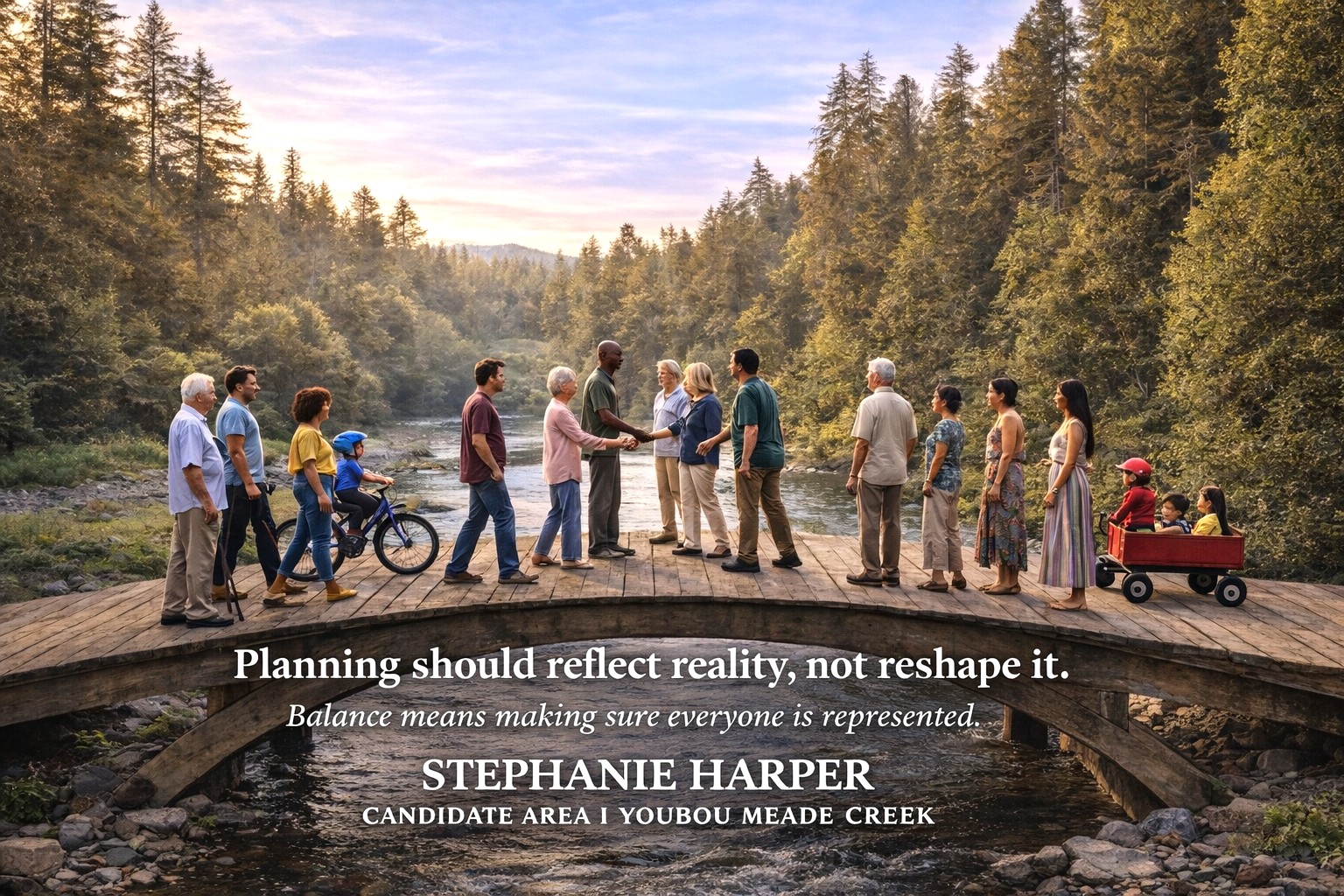
Planning should reflect reality — not reshape it.
Balance means making sure everyone is represented.
There is a better way forward — one that brings stability back and creates solutions that actually fit.
This isn’t about rushing decisions.
It’s about pausing and getting it right.
At this point, the Board’s best option is to stop.
Cease moving forward on local area plans, development permit areas and amending the draft CZB until the core issue – the OCP is properly addressed.
The current Board set the strategic direction that led us here and reinforced it through adoption of the OCP. Given that, they do not have a clear mandate to change direction now — and reacting too quickly risks further eroding trust and credibility.
The most responsible step for the community — and for stability — is to stop and allow the next Board, with a clear mandate, to carry this forward.
Let’s reset and focus on solutions that work for all of our communities.
– Stephanie Harper
Candidate, Area I – Youbou / Meade Creek